Table of Contents
ToggleA dental implant that feels loose a decade after placement is not automatically failing, and it is rarely random. In most cases, movement years later traces back to a mechanical problem, such as a loosened abutment screw, a worn crown connection, or a shift in bite forces, rather than a new infection. Infection gets most of the attention in implant discussions, but plenty of stable, healthy implants develop looseness from wear and mechanical fatigue alone.
That distinction matters because the fix is often far simpler than patients expect. A loose screw can sometimes be retightened or replaced in a single visit with a provider experienced in dental implants in Minot, ND, while a truly mobile implant fixture calls for a different conversation entirely.
Knowing which part is moving, and why, is the first step toward protecting the investment you made in your smile.
What Is Actually Moving?
The sensation of “looseness” can come from several different parts of an implant system, and each one carries a different level of concern. Pinpointing the source, whether it’s the visible crown, the connecting abutment, or the titanium post anchored in bone, determines how urgently you need care and what treatment will involve.
A Loose Crown vs. a Loose Implant Fixture
A loose crown is a cosmetic and mechanical issue, while a loose implant fixture is a structural one. The crown is the visible tooth-shaped cap; if it wiggles, chances are the cement holding it has broken down or the screw beneath it has backed out. The implant fixture, by contrast, is the post fused into your jawbone. If that piece moves, it signals a breakdown in the bone-to-implant connection itself, a far more serious situation than a loose crown.
How Abutment and Screw Problems Create Movement
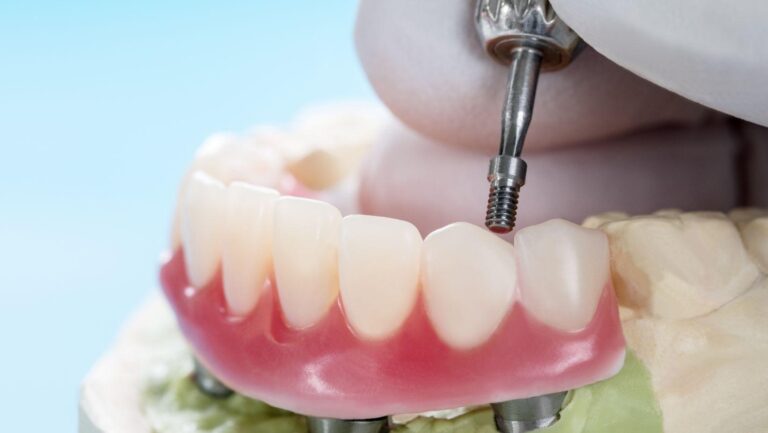
The abutment connects the crown to the implant post, and it is held in place by a small screw that can loosen under repeated chewing forces. Over years of biting and grinding, that screw can back out fractions of a millimeter at a time. You may not notice anything until the crown suddenly feels wobbly or shifts when you bite down on something firm.
Why the Source of Mobility Changes the Outlook
Identifying which component moved changes the entire treatment path. A loose screw or crown is typically a same-visit repair with no impact on the implant’s long-term survival. A mobile fixture means the bone anchoring the implant has been compromised, which requires imaging, a broader workup, and sometimes removal. Dentists distinguish between these scenarios early, because treating a loose crown as if it were implant failure (or vice versa) wastes time and can allow a minor issue to become major.
Non-Infectious Reasons Stability Can Change
Bite forces, worn hardware, natural bone changes, and physical trauma account for most non-infectious looseness. None of these involve bacteria attacking the implant site, yet each can gradually or suddenly affect how solid your implant feels.
Bite Changes, Clenching, and Grinding Forces
Years of clenching or grinding place repetitive stress on implant components that natural teeth would distribute differently. Unlike a natural tooth, which has a ligament that absorbs shock, an implant is rigidly fused to bone. That rigidity means excess force transfers directly to the screw and crown connection, gradually loosening them. Patients who grind at night often see this show up as recurring screw loosening every few years, even when oral hygiene is excellent.
Component Wear, Fractures, and Cement Failure
Mechanical parts wear out with use, and implant hardware is no exception. Abutment screws can fatigue and micro-fracture after years of cyclic loading. Cement bonding a crown in place can break down chemically over time, especially with exposure to saliva and temperature changes from hot and cold foods. Any of these failures can produce a loose feeling that has nothing to do with the health of the surrounding gum or bone.
Bone Remodeling and Changes in Jaw Support
Bone around an implant remodels slightly over the years, even in the absence of disease. Minor resorption can change how snugly the surrounding bone supports the fixture. This process is usually slow and subtle, but combined with heavy bite forces or an aging jaw structure, it can contribute to a perceptible change in stability.
Trauma and Damage From Chewing Hard Foods
Biting down unexpectedly on something hard, ice, a popcorn kernel, a fork tine, can shock-load the implant and its components. A single hard impact has the potential to crack a crown, loosen a screw, or in rare cases stress the implant-bone interface. Patients often remember the exact moment this happened, which makes it a useful detail to mention during an evaluation.
When to Arrange an Implant Assessment
Any sensation of movement, shifting, or a change in how your bite feels warrants a dental visit, ideally within days rather than weeks. Waiting allows a simple mechanical fix to progress into a more complex repair, since ongoing chewing forces continue to stress an already compromised connection.
Symptoms That Need Prompt Dental Attention
Pay attention to a crown that rocks side to side, a sharp or metallic taste suggesting a cracked component, new gaps between the implant crown and neighboring teeth, or a change in how your teeth meet when you bite down. Pain is not always present with mechanical looseness, so the absence of discomfort should not delay a call to your dentist.
Why an Implant Will Not Tighten on Its Own
A loose implant component cannot resolve itself, because the mechanism behind it, whether a backed-out screw, degraded cement, or bone remodeling, does not reverse without intervention. Continuing to chew normally on a loose implant typically accelerates wear on the threads and connecting parts. What starts as a five-minute screw retightening can become a full crown replacement if left unaddressed for months.
How Dentists Identify the Failing Component
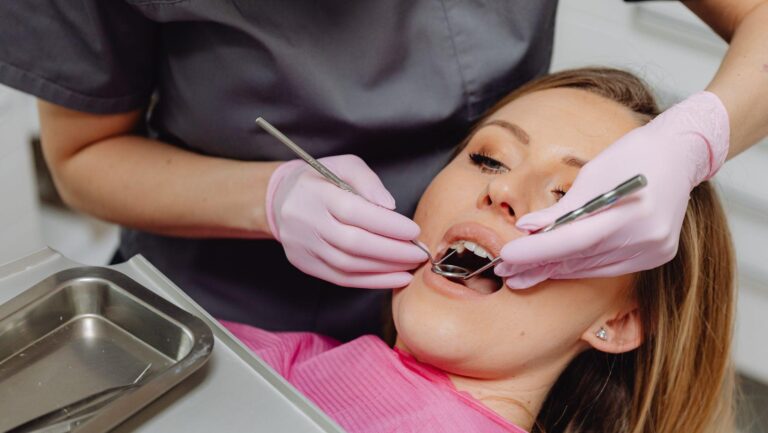
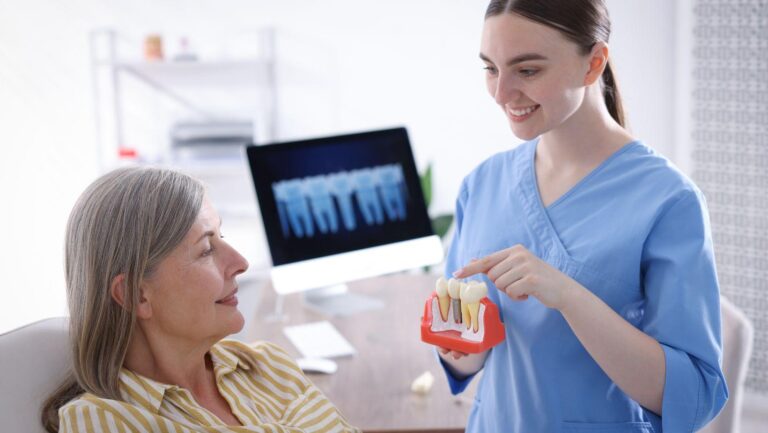
Your dentist will start by isolating whether the crown, abutment, or fixture is the source of movement, often by gently testing each part individually and comparing your bite. X-rays reveal the bone level around the implant and can show a fractured screw or gap that is not visible by eye. In some cases, the crown is removed entirely so the abutment and screw can be inspected directly.
Typical Repair Options for Mechanical Problems
Many mechanical issues are treated while preserving the original implant fixture. A loosened screw can be removed, checked for damage, and retightened to the correct torque specification. A cracked screw is replaced outright. Loose crowns can be re-cemented or, if the connection has failed repeatedly, converted to a screw-retained design for a more secure long-term fit.
Prompt Assessment Protects the Implant
Looseness years after placement points to a mechanical or bite-related cause more often than a new infection. Screws loosen, cement wears down, and jaw forces shift the way they always have, none of which reflects poorly on the implant itself or how it was placed. The distinguishing factor is timing: getting it looked at early keeps a minor fix minor. Your dentist can identify the exact component involved and address it before ordinary chewing turns a loose screw into a bigger repair.