Table of Contents
ToggleFull mouth dental implants carry survival rates above 90% in most published outcomes, but that number shifts when diabetes or smoking enters the picture. Both conditions interfere with the same biological process that anchors implants to bone, and together they compound the risk in ways that surprise many patients during consultation.
None of this means implants are off the table. Well-managed diabetes and a realistic smoking cessation plan can bring your risk profile close to that of a healthy nonsmoker, but getting there requires honest conversations with your surgeon about blood sugar numbers, healing timelines, and habits you may need to change before surgery.
This matters even more if you’re planning a full mouth dental implant in Plymouth, WI rather than a single-tooth replacement, since one failed implant in a full mouth restoration can jeopardize the entire prosthesis rather than one isolated site.
Healing, Bone Integration, and Infection Risk
Diabetes and smoking both interfere with osseointegration, the process that fuses implants to your jawbone, and each does so through a different biological pathway. Elevated blood sugar slows tissue repair and feeds bacterial growth, while nicotine and carbon monoxide from tobacco reduce the oxygen and blood flow your gums and bone need to heal.
Why Osseointegration Is Critical for Full-Arch Stability
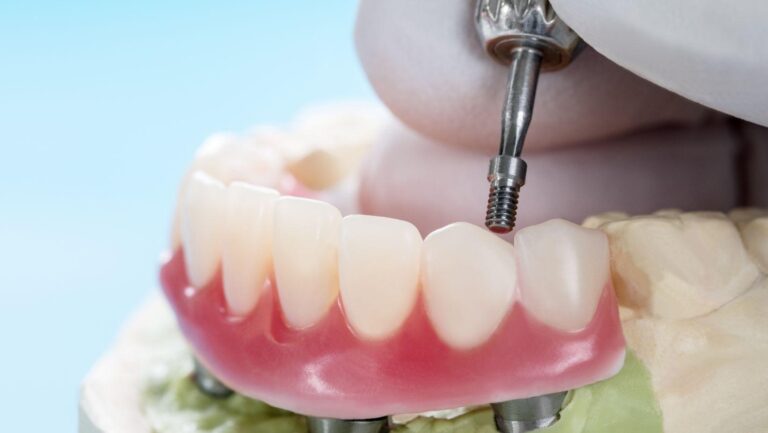
Osseointegration determines whether an implant becomes a permanent part of your jaw or eventually loosens and fails. In a full mouth restoration, typically four to eight implants per arch support the entire prosthesis, so every single fixture has to integrate successfully.
A full-arch bridge distributes bite force across all its supporting implants. If even one implant fails to integrate, the load shifts to the remaining posts, which can accelerate wear and increase the chance of a cascading failure across the whole restoration. This is why surgeons evaluate bone density and healing capacity so carefully before committing to a full-arch plan, rather than treating each implant site in isolation.
How High Blood Sugar Can Delay Healing
Poorly controlled blood sugar slows the cellular activity your body needs to bond bone to titanium. Elevated glucose levels impair collagen formation and reduce the effectiveness of white blood cells, which extends healing time and raises infection risk during the critical weeks after placement.
Research comparing diabetic and non-diabetic implant patients shows measurably higher marginal bone loss in those with uncontrolled glucose levels. Diabetes also alters saliva composition and encourages bacterial growth in the mouth, creating conditions that work against healing rather than supporting it.
Patients with well-managed HbA1c levels tend to show integration results close to those of nondiabetic patients. The distinction between controlled and uncontrolled diabetes matters more than the diagnosis itself.
How Tobacco Restricts Blood Flow and Oxygen Delivery
Nicotine constricts blood vessels, cutting off the oxygen and nutrients your gum tissue and jawbone need to regenerate around a new implant. Carbon monoxide from cigarette smoke further reduces the blood’s oxygen-carrying capacity, compounding the effect at the cellular level.
Studies on implant prognosis in smokers show the impact is more pronounced in areas with poor-quality trabecular bone, which is common in the upper jaw. Maxillary implants in smokers fail at higher rates than mandibular implants, since the upper jaw already has softer, less dense bone to begin with.
Smoking has been identified consistently as a major risk factor for implant failure across decades of research. The reduction in blood flow does not just slow healing; it can prevent integration from completing at all in some sites.
Why Peri-Implant Disease Threatens an Entire Restoration
Peri-implantitis, an infection that destroys bone around an implant, occurs at meaningfully higher rates in patients with diabetes or a smoking history compared to healthy nonsmokers. Left untreated, this infection can spread to neighboring implant sites in a full-arch restoration.
Meta-analyses have identified increased peri-implantitis risk in both diabetic and smoking patients, with some data pointing to roughly 50% higher risk in diabetics with less-than-ideal glycemic control. Because a full mouth restoration relies on multiple implants working as a system, infection at one site can threaten the stability of the entire prosthesis rather than staying contained.
Evaluating Candidacy and Reducing Modifiable Risks
Controlled diabetes and smoking cessation before surgery shift the odds meaningfully in your favor, and most implant dentists build their candidacy evaluations around exactly these modifiable factors. What follows covers the specific numbers, timelines, and habits that dental teams weigh when deciding whether you’re ready for full-arch surgery.
Does Controlled Diabetes Rule Out Full Mouth Implants?
Controlled diabetes does not rule out full mouth implants. Patients with well-managed blood sugar can achieve implant success rates comparable to those without diabetes, according to multiple systematic reviews on implant outcomes in diabetic patients.
The duration of diabetes matters alongside control. Longer-standing diabetes, even when currently managed, has been associated with somewhat higher failure risk than recently diagnosed cases, likely due to cumulative effects on small blood vessels and bone metabolism.
Patients with uncontrolled diabetes face a different picture. Uncontrolled blood sugar increases the risk of infection, delayed healing, and compromised bone integration to a degree that most surgeons consider a contraindication until levels stabilize.
Why HbA1c and Medical History Matter Before Surgery
Your HbA1c reading gives your surgical team the clearest single measure of your surgical readiness. Many implant practices use an HbA1c threshold around 7% as a general benchmark for proceeding with elective implant surgery, though your surgeon will weigh this alongside your full medical history.
A thorough pre-surgical workup typically includes:
- Recent HbA1c and fasting glucose readings
- Duration of diabetes diagnosis and current medication regimen
- History of prior healing complications or infections
- Any additional conditions affecting bone metabolism, such as osteoporosis
This evaluation lets your dentist decide whether to proceed as planned, adjust the surgical timeline, or coordinate with your physician to bring glucose levels into a safer range first. Skipping this step raises the odds of complications during the healing phase that follows placement.
When Should Patients Stop Smoking Before Implant Treatment?
Stopping smoking at least two to four weeks before surgery, and staying smoke-free for at least eight to twelve weeks afterward, gives your tissue meaningfully better conditions to integrate implants. Some surgeons recommend cessation as early as one month before placement to allow blood vessel function to begin normalizing.
Complete abstinence produces the best outcomes, but reducing frequency still helps compared to continuing at a pre-surgery pace. If quitting entirely feels unrealistic, talk with your surgeon about nicotine replacement therapy options that don’t restrict blood vessels the way smoked tobacco does.
The healing window after implant placement is when your tissue is most vulnerable to the effects of reduced blood flow. Patients who resume smoking too early into recovery show measurably higher early failure rates than those who wait out the full healing period.
Oral Hygiene, Maintenance, and Follow-Up Care
Consistent oral hygiene and scheduled maintenance visits are what keep a full mouth restoration functioning for years after healing completes. Daily cleaning around implant abutments, along with professional cleanings every three to four months for higher-risk patients, catches early signs of peri-implant inflammation before they progress.
Diabetic patients benefit from tighter monitoring schedules, since altered saliva composition and bacterial activity associated with elevated glucose can accelerate plaque buildup around implants. Your dental team may recommend more frequent check-ins during the first year, then adjust based on how your tissue responds.
A realistic maintenance routine includes:
- Daily brushing with an interdental brush or water flosser designed for implant-supported bridges
- Professional cleanings scheduled around your specific risk factors rather than a generic six-month default
- Periodic X-rays to monitor bone levels around each implant
- Prompt reporting of any bleeding, swelling, or looseness in the prosthesis
Better Health Control Supports Lasting Full Mouth Implants
Diabetes and smoking each interfere with healing and bone integration through distinct mechanisms, and together they raise the stakes for a restoration that depends on multiple implants working in sync. Controlled blood sugar, a realistic smoking cessation timeline, and consistent maintenance narrow the gap between diabetic or smoking patients and the general implant population.
Candidacy comes down to specifics: your HbA1c reading, how long you’ve smoked, and your willingness to follow a maintenance routine built around your risk profile. A frank conversation with your implant surgeon about these factors, before treatment begins, gives you the clearest picture of what to expect from healing through years of function.